

The history of incense stretches back thousands of years. Burning incense is one of humanity's oldest religious practices. We do not know exactly when people first discovered that certain woods, plants, and natural resins release a remarkable fragrance when burned. We do know, however, that incense had already become an important part of religious ceremonies in ancient civilizations, expressing offering and communication with the divine.
The History of Incense in the Ancient World
For people in antiquity, smells played a far greater role than we usually attribute to them today. Pleasant fragrances were associated with cleanliness, health, life and well-being, while unpleasant odours suggested illness, decay and death. Over time, pleasant fragrances also became associated with the presence of the divine and the sacredness of places of worship.
Natural resins, particularly frankincense and myrrh, held a special place among aromatic substances. When placed in a fire or on burning charcoal, they released fragrant smoke that rose towards the sky. This transformation of matter made the burning of incense a particularly expressive symbol of offering to the divine.
In ancient Egypt, incense was used in temples and funerary ceremonies. In the Greek and Roman worlds, the burning of incense became so closely associated with sacrifice that it could serve as a religious offering in its own right.
The demand for precious aromatic resins led to the development of extensive trade networks. Frankincense and myrrh were transported from southern Arabia and other distant regions to the major centres of the Mediterranean world.
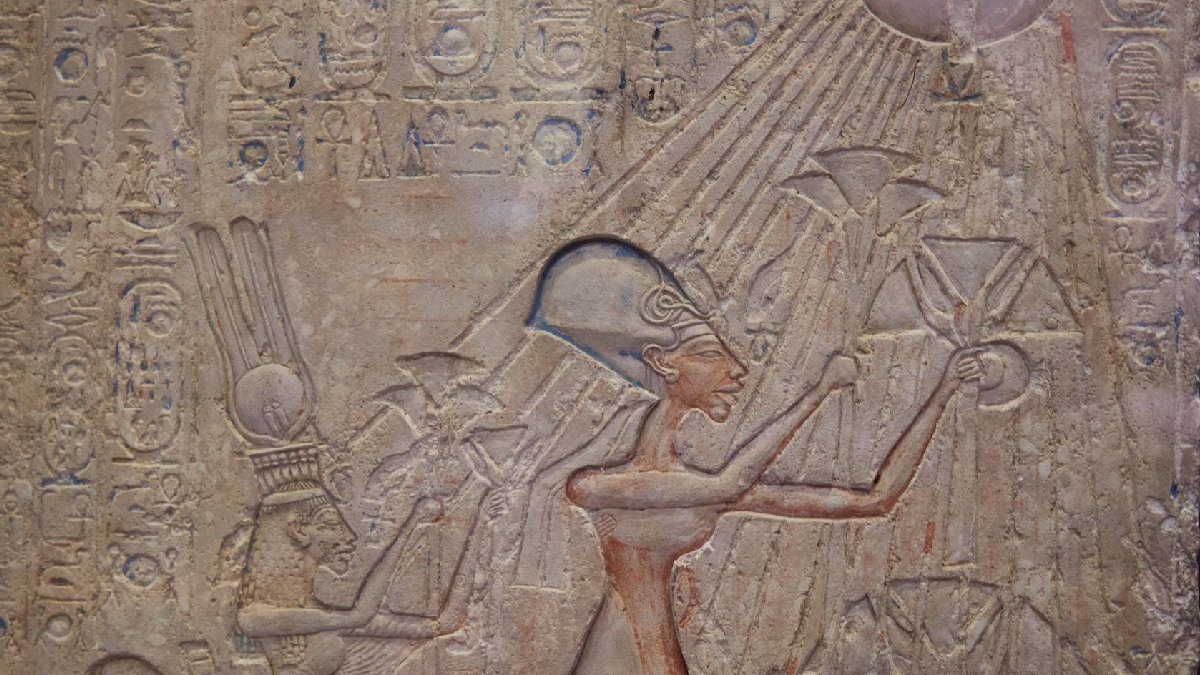
Photo: Keith Schengili-Roberts /
Wikimedia Commons /
CC BY 2.5.
The image has been cropped.
Incense in the Old Testament
The burning of incense acquired particular significance in the worship of ancient Israel. The Book of Exodus describes in detail both the altar of incense and the composition of the sacred aromatic mixture, which was offered before God every morning and evening.
Incense thus became associated with prayer and humanity's offering to the Creator. This relationship is expressed particularly clearly in the words of the Psalm:
“Let my prayer be set forth before Thee as incense; the lifting up of my hands as the evening sacrifice.”
Psalm 140:2 (Septuagint numbering)
The smoke rising towards heaven became an image of prayer ascending to God.
Incense in Early Christianity
The first Christians inherited this biblical symbolism, yet initially approached the ritual burning of incense with caution.
In the Roman Empire, offering a few grains of frankincense on an altar could signify participation in the worship of pagan gods or the imperial cult. Refusing to perform such an act could expose Christians to persecution and martyrdom.
For this reason, early Christian writers placed particular emphasis on the concept of spiritual fragrance: prayer, virtue and a life devoted to God.
The Apostle Paul describes believers as “the fragrance of Christ” (2 Corinthians 2:15), while referring to Christ's sacrifice as “an offering and a sacrifice to God for a sweet-smelling aroma” (Ephesians 5:2).
A particularly striking example appears in the account of the martyrdom of Saint Polycarp, Bishop of Smyrna, in the second century. According to this early Christian text, those witnessing his martyrdom perceived a wonderful fragrance, as though frankincense or another precious aromatic substance were burning.
Here, fragrance becomes a sign of holiness and of a sacrifice pleasing to God.
Censing in the Orthodox Church
As Christianity became more clearly distinguished from pagan sacrificial practices, incense gradually found its place in the Church's liturgical life.
Today, censing is one of the most recognisable elements of Orthodox Christian worship.
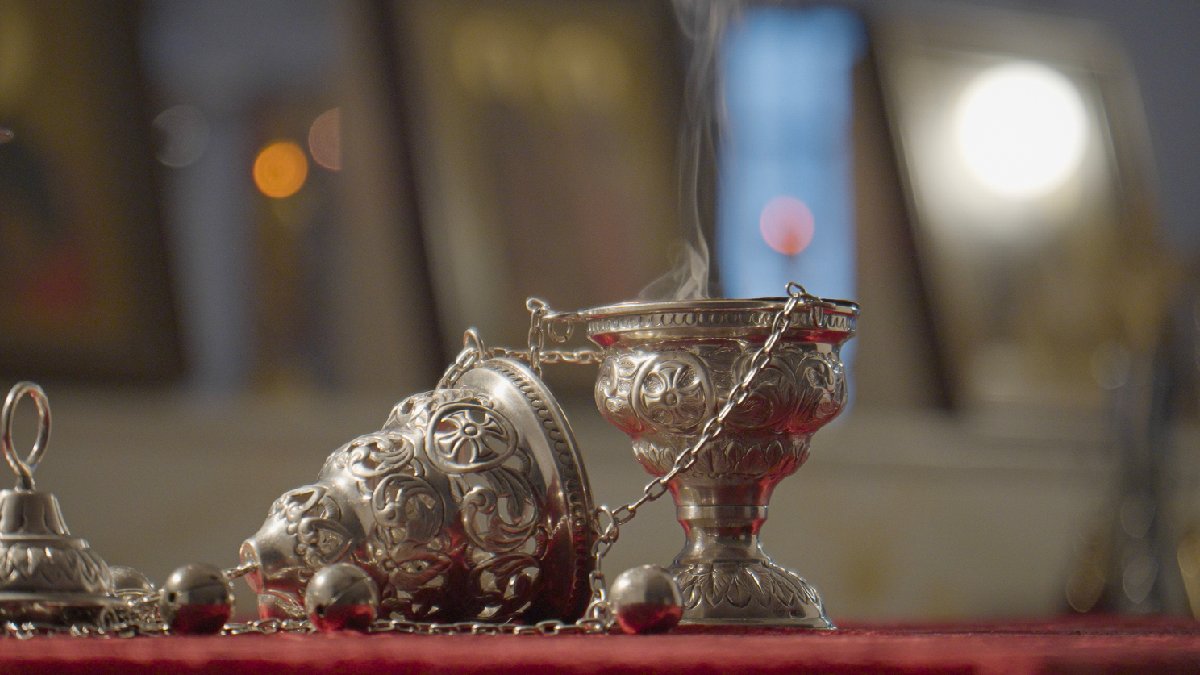
The smoke rising from the censer symbolises prayer ascending to God, while its fragrance recalls divine grace and holiness. Censing the church, sacred icons and the faithful expresses reverence for holy persons and honours the image of God in every human being.
At the same time, the art of preparing church incense also developed. In the Orthodox world, the Greek and Athonite tradition holds a special place. According to this tradition, natural frankincense resin is ground, mixed with aromatic oils and shaped into small pieces.
This traditional technique allows for a wide variety of fragrances while retaining natural frankincense resin as the main raw material.
A Tradition That Continues
The history of incense is not merely the history of an aromatic substance. It is the story of a symbol that has endured through the centuries: matter is consumed by fire, fragrance fills the surrounding space, and smoke rises towards heaven, just as human prayer ascends to God.
Our workshop, INCENSUM GRAECUM, also continues this tradition, producing handmade Greek church incense with respect for the Athonite tradition and the techniques passed down from generation to generation.